Showing posts with label Irish. Show all posts

Tuesday, December 6, 2016

Irish Christmas Plum Pudding


Irish Christmas Pudding

Plum pudding has been traditional in most Irish homes and is generally served later in the day on Christmas day together with a custard and the indespensibe cup of tea! And of course a sprig of holly on top.

In Ireland, it is often prepared monts in advance of Chrismas Day and it would not be unusual to start preparations as early as Spring. Generous amounts of alcohol are often poured over the concoction, usually brandy and on the day itself, you can even set it alight!

You will need:

3 oz self raising flour

6 oz Sugar

6 oz butter

3 Eggs

1/2 tsp Cinnamon

1/2 tsp nutmeg

1 tsp Mixed Spice

Pinch of Salt

8 oz sultanas

8 oz cherries

4 oz mixed peel

1/2 pint Guinness or 1/2 cup whiskey

8 oz Ground Almonds


DAY ONE:

Combine dry ingredients i.e. flour, salt, and spices (nutmeg, mixed & cinnamon)

Lightly beat the eggs

Cream butter and sugar then add eggs until mixed well

Fold in the mixed dry ingredients (as listed above)

Add the dried fruit and nuts (raisins, sultans, cherries, almonds and mixed peel) and mix well

Pour on the Guinness (or alcohol) and leave to stand overnight with a cover.

DAY TWO:

It can be steamed for or up to several hours, between five and twelve depending on your taste and the alcohol used. Guinness could use five hours. If you prefer whiskey, the sky’s the limit!

Stovetop Method

To steam on the stove, make a steam bath for the pudding by placing in a greased container and covering with foil or greaseproof paper. Secure with tinfoil and elastic band or string. Place the container in a larger saucepan and fill half way up with water. The pan will need to be topped up regularly with boiling water.

Oven Method

Simply place the covered secured contained in a steam bath at 300 degrees in the oven for the same cooking times. The “bath” will not require “topping up” with water nearly as much as on the stove top, if at all.

DAY THREE

Finally, everyone gets to enjoy this age old recipe! To re-heat, the microwave is always an option. But to remain true to tradition, the old fashioned steaming methods will also work. So keep your steam baths out and put them on for about two hours. outlined above for about 2 hours and serve with custard, cream or ice cream. Of course that comes with a spig of holly on top!

Traditionally, this dish is served a few hours after dinner since it’s quite filling!

The very brave have been known to pour some alcohol on top and set it on fire. Good Luck!

-----------------------------------------------------------------------

Saturday, April 30, 2016

The Popularity of Beautiful Irish Red Hair in Modern Times

The Popularity of Beautiful Irish Red Hair in Modern Times


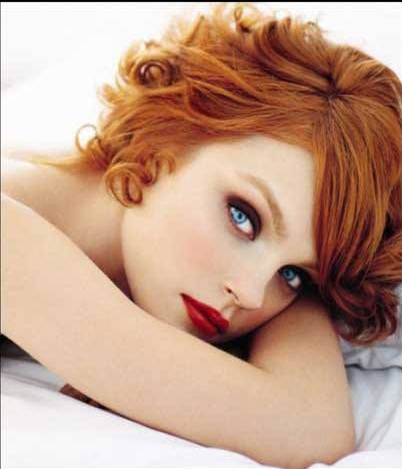
One of characteristic options of the people of Ireland is red hair, particularly pale red hair. Although earlier people with red hair were typically ridiculed, nowadays Irish red hair is one of the most popular and fascinating hair colors for girls.

For people with red hair, redhead is the common term used that is commonly related to the people of Irish origin. Red hair will vary from deep orange to bright copper-colored hair, although Irish red hair generally refers to pale red hair. Contrary to the favored belief that Irish people sometimes have red hair, small percentage of Irish people, about 10%, are found with red hair. On the opposite hand, 13% populations of Scotland have red hair. In spite of this reality, red hair is commonly related to Irish people, which, at just once became subject of discrimination and humiliation in England, as a result of the mistrust between the two nations (England and Ireland).

The characteristic red hair related to Irish people is truly caused by the presence of high level of the pigment referred to as pheomelanin. The amount of the dark pigment eumelanin is low among the people with red hair. The concentration of each the kinds of melamin pigments are set by genes. It’s been discovered that the changes within the gene melanocortin-1 receptor (MC1R), found on body sixteen is chargeable for manufacturing this hair color. The MC1R recessive variant gene, which supplies red color to the hair, is found to be additional prevailing among the people of Ireland and Scotland.

It has also been determined to be accompanied by pale skin and freckles. Pale or truthful skin is truly ensuing of low concentration of the pigment eumelanin that has special advantage for the people living within the equator regions. These regions sometimes don't receive adequate amount of sunlight and then, light-weight skin is critical to provide adequate amount of vitamin D. On the opposite hand, this additionally has disadvantage, as people with light-weight skin are at higher risk for developing skin cancer.

During the Elizabethan era, such hair became fascinating quality, particularly for women. Queen Elizabeth I of England had red hair and as a result of this fact it became trendy for many women. Gradually, beautiful women with red locks became subject of the many paintings, as painters developed growing interest and fascination with red hair.

Many believe that rarity of red hair is principally responsible for making wide quality for this sort of hair color. Today, celebrities like Lindsay Lohan and Alyson Hannigan have additional accumulated the popularity of red hair among the masses. Now, red dye is one among the most wanted hair dyes by both men and women.
Irish red hair isn't any longer considered as the hair type related to stigma and humiliation. Rather it's become fashion trend and fascinating hair color for nice majority of the population together with celebrities. Aside from Ireland, large numbers of individuals with red hair are found in U. S., Netherlands, Belgium, France, Portugal, Spain, Italy, Germany, Russia and Albania.

Stay tuned for our upcoming blogs on the truths about red hair becoming extinct, why people think gingers steal souls and more!

Find awesome items for the redhead in your life on our website www.ilovebeingirish.net


Friday, April 29, 2016

Irish Cheese Tart Recipe


Short Crust Pastry

3/4 cup of flour

Pinch of salt

3 oz Kerrygold butter, cut into small cubes

3 tablespoons cold water


Preheat the oven to 400 degrees F

To make the pastry, sift the flour and salt then rub in the butter until
the mixture resembles bread crumbs.
Add the water and form into a ball. Roll out the pastry until large enough
to line an 8 inch pan.
Place a piece of foil over the pastry to cover the base and sides.
Bake for 10 minutes, then remove the foil and bake for a further 5 minutes.
Remove from the oven to cool.

Cheese Tart Filling

1/2 oz Kerrygold butter
1 small onion
1 clove garlic, crushed or finely chopped
3 slices back bacon, and cut into strips
8 button mushrooms, wiped and cut into thick slices
6 cherry tomatoes, halved
6oz Dubliner cheese, grated
1 cup skimmed milk
3 medium size eggs, beaten
1oz pack fresh Mediterranean herbs, finely chopped
1 teaspoon whole grain mustard
Salt and freshly ground black pepper

Reduce the oven temperature to 375 degrees F.

Melt the butter and cook the onions until softened but not browned.
Add the garlic, bacon and mushrooms, then cook for a further 5 minutes.
Spoon the mixture into the pastry base, adding the tomato halves and
sprinkle over the Dubliner cheese.
In a jug mix together the milk, eggs, herbs, mustard and seasoning and pour
over the filling.
Bake for approximately 30 minutes until the filling is just firm to touch,
then serve with a salad.

Serves 4-6

Tuesday, August 26, 2014

FINN MCCOOL (Fionn MacCool) An Irish Legend

FINN MCCOOL COMES TO AID THE FIANNA 


Fionn MacCool, was no ordinary giant. He was the biggest and the strongest giant in all Ireland. His voice could be heard for miles around. He was so strong that he could lift a hundred men in one of his enormous hands. Fionn lived with his wife in the hills of County Antrim. Fionn’s wife was called Oonagh.
One day a messenger came to Fionn’s castle. He had come all the way from Scotland with news for Fionn. The messenger told Fionn that a Scottish giant called Angus wanted to fight him. Angus wanted to show that he was stronger than any giant in Ireland. Fionn had never seen Angus before, but he knew that he was the biggest giant in Scotland. Fionn was not afraid.
The next day, Fionn began to build a path across the sea to Scotland. This path was called the causeway. It was made of thousands of rocks. Fionn built many miles of the causeway with his great hands. When Angus heard about Fionn’s causeway, he decided to build the Scottish end of the causeway himself. For weeks the two giants worked hard at building the causeway.
One morning Fionn was in the forest near his castle. He saw his wife coming towards him. He ran over to her.
She said to him, “I have heard that Angus is the biggest and the strongest giant in all the world. He is twice as big as you and twice as strong!” Fionn was very worried. “I cannot fight a giant that is twice my size!”
As the sun was setting, he heard a knock on the door. It was the messenger. “Angus wants to fight you tomorrow at sunrise,” he told Fionn.
“Yes, of course,” replied Fionn.
He went into his bedroom when the messenger left. He took the blankets off the bed. Fionn and Oonagh worked through the night. They cut the blankets and made giant baby clothes. Fionn put on the baby clothes and got into the giant cradle.
At sunrise the next morning, Oonagh heard a knock on the door. It was Angus. Angus asked Oonagh was Fionn there. Oonagh told him that he was gone for a walk and that he would be back soon. She invited him in. It was not long before Angus heard a cry. He asked whom it was, pointing to the cradle. Oonagh said, “That’s young Fionn, our baby.
Angus thought that if this is the size of their baby, how big could Fionn be. Then he ran out of the castle as fast as he could. He ran across the causeway and did not stop until he reached his country. He was afraid that Fionn might follow him.
Today, if you go to County Antrim, you can still see a small piece of the causeway. It is called the Giant’s Causeway, because it was built by Fionn Mac Cool, the most famous giant in the history of Ireland.


Tuesday, August 12, 2014

Top 5 things to do in County Cork Ireland

We all have our favorite things to do when visiting County Cork (Contae Chorcaí), but these are my personal top five must go to attractions. Feel free to add your favorite County Cork attractions in the comment section!


Ireland’s largest cable wakeboarding centre. Ballyhass is delighted to bring the world’s latest and fastest growing water sport into the heart of Munster. Cable wakeboarding uses an overhead cable which pulls you over the surface of the lakes with a feel just like surfing or snowboarding but on water. This is the most accessible water sport for all ages and most of all fantastic fun.


With Ocean Escapes you can explore the coastline both inside the harbour and beyond. Our sightseeing tours allow you to encounter Pods of dolphins and whales in and around the Cork coastline. Experience the unique thrill of a fast ride onboard our RIB and Enjoy the sights from a very different perspective.


Fota Wildlife Park is Cork's most visited Tourist Attraction and has been awarded best family day out in Cork and Munster. The Park is set on 70 acres on the scenic Fota Island in the heart of Cork Harbour only 15 minutes from Cork City (top 10 in the best cities to visit in the Lonely Planet guide's 'Best in Travel 2010').The park is not like an ordinary zoo; here you can come face to face with free roaming animals & birds from all parts of the world. So whether it's a kangaroo that hops in front of you or a ring tailed lemur which jumps down from a tree, each visit is sure to bring its own fantastic memories.In addition to the wonderful array of free roaming animals, visitors also have the opportunity to see highly endangered species such as the Rothschild giraffe, European Bison, Lion Tailed Macaque and Scimitar Horned Oryx, most of them without the obstacle of fenced-in exhibits.This is the most spectacular aspect of Fota Wildlife Park, and is the reason you'll want to spend a full day exploring Ireland's Wildest Attraction.


Actually in the  famous east Cork fishing village of  Ballycotton is a very scenic spot known as the Ballycotton Cliff walk.  This is not a well known area to Irish locals never mind visitors to this country, yet views from the cliff walk can give many other coastal scenes a run for their money.


An extreme walk-through haunted event preying on your deepest fears and nightmares and twisting them into a deadly reality. All Nightmare Realm events change yearly with new themes, scenes and characters from the grotesque and blood churning to the sick and extreme.

Your pulse will race and you will laugh and cry at the same time. The Nightmare Realm is not for the faint of heart and younger people may need to be supervised by an adult. The Nightmare Realm annually draws thousands of fans (victims) to their unique and compelling events from ages 13 to 90.


Thursday, August 7, 2014

The Annual Across Ireland Motorcycle Run celebrates it's 10th year


The Across Ireland motorcycle run is approaching again. 2014 marks the 10th year of this charity event and the call has gone out for willing participants.

This year’s two-wheeled fun run takes place on the August Bank Holiday weekend (August 23rd and 24th) and will start from the Xtreme45 Motorcycle Shop, on the Old N1 road, North of Swords.

The run is a cross-country affair, travelling from Swords to Eyre Square in Galway, with an overnight stay for participants in the renowned and popular Hotel Clybaun, and on the Sunday, the return jaunt to Dublin.

Read more here

To pre-register for the cycle run and download a copy of the registration form, go to www.acrossireland.com

Sunday, July 27, 2014

"But you're Irish!"


The Irish must be one of the most stereotyped groups of people on the planet. There are the semi-positive ones: leprechauns, red heads and being great storytellers. Then there are the negative ones: heavy drinking, tendency to violence and being stupid. But where have these stereotypes come from? Like most groups, the Irish have been stereotyped by others, not themselves. Believe it or not, we don't think of ourselves as cheery, Guinness-guzzling leprechauns - that's how other people have portrayed us. Both the England and the USA have seen heavy Irish immigration over the years, and it is in these countries that many of the stereotypical ideas of the Irish have been formed.

1. The Irish are heavy drinkers. Truth rating: 8
Historical records of the Irish love of alcohol date from ancient times, when Roman historians noted the Celtic people's particular love of wine. And there is unfortunately a notable genetic tendency towards alcoholism among the Irish, in common with other groups such as the Scottish, Scandinavians and Native American peoples. So there may in fact be a sad grain of truth to the stereotype that the Irish don't know when to stop drinking. Added to that is the strong pub culture in Ireland which continues to this day - this results partly from our famously wet weather which discourages healthy outdoor activities, and partly from a strong cultural idea that drinking alcohol is an essential part of socializing . However, there are Irish people who don't touch alcohol, and others who drink lightly (like myself!). So it doesn't do to generalize.
Overall this stereotype gets a truth-rating of 8 out of 10. I've traveled a lot and my native Ireland is definitely one of the stronger drinking cultures I've encountered. However I've knocked a couple of points off because plenty of other people drink a lot but don't get stereotyped!
2. The Irish are hot-tempered and quick to fight. Truth rating: 4
Most of the Irish people I know are the friendliest, mildest people you could ever hope to meet. The stereotype of the fighting Irish seems to have arisen in response to a wave of Irish immigrants into America in the later nineteenth century. On almost the bottom rung of society, the Irish gained a reputation of fighting fiercely to keep any advantage they had managed to gain. Added to that most likely was the British impression of their 'rebellious Irish' subjects. Britain ruled Ireland for seven centuries and there were indeed various rebellions against a rule that the native Irish saw as illegitimate and unfair.
So this stereotype gets a 4; the Irish are certainly capable of fighting - they are not Buddhist monks - but not are not necessarily more inclined to violence than any other group.
3. Irish have 'the gift of the gab'. Truth-rating: 9
The 'gift of the gab' means the ability to spin a great story - regardless of factual truth. In my experience living here, the Irish are great at this. Everyone on this island is a natural storyteller. There is a rich tradition of myth and legend in Ireland, and it often seems we prefer a good story to factual accuracy. What you need to understand if you are not from Ireland, is that this is not the same as lying - in Ireland everyone knows when someone is 'spinning a yarn' (telling a good story that isn't true). It is considered good entertainment, not an attempt to deceive anyone - though it can confuse visitors!
This gets a truth-rating of 9 because in all my travels I have never met storytellers like the Irish. Added to this is Ireland's great literary tradition - Ireland has four Nobel-winning writers. Not bad for a small island!
4. The Irish are stupid. Truth rating: 0
This is probably the most racist myth spread about the Irish. In the nineteenth century and continuing into the twentieth, the Irish were caricatured as a lesser race than other Europeans, and as ape-like and stupid. In the past, through poverty the Irish struggled to have access to education, but they were perfectly intelligent. Today Irish graduates are employed all over the world and many international companies are based in Ireland because of the highly-educated hard-working population.
5. The Irish love potatoes. Truth rating: 7
This is pretty true of older generations, who grew up on potatoes as a staple food, and who like to eat them every day. As one person I was chatting to recently put it: "The Irish talk about potatoes the way other people talk about wine. We are potato connoisseurs!" Older folk in Ireland can discuss at length the best potato-growing areas and the best season for certain varieties. Potatoes became the staple food of the Irish because they grew easily in our wet climate and because a small plot of potatoes could feed a family for a year.
However, I have given this stereotype a truth rating of 7 because it is going out of date. The Irish have embraced world food culture and our supermarkets are full of Asian, Italian and Spanish foods nowadays.
6. Ireland is the land of Leprechauns. Truth rating: 3
There are many stories about a whole range of supernatural beings in Ireland. I have no idea why Leprechauns have become world famous, while almost no one has heard of the 'Tuath de Danaan', the 'pooka', the 'fir dearg' or any of the others. Maybe the Lucky Charms advertisements had something to do with it! Truth rating is 3 because while there are various Irish stories about Leprechauns, there are many other Irish fairies who deserve not to be forgotten!
What I have learned from exploring the stereotypes about the Irish is that stereotypes can be based on a small grain of truth which is exaggerated, or they can also be based on racist ideas which have no truth at all. Because I know how many Irish stereotypes aren't true, it helps me to remember not to stereotype other people. At the end of the day, I firmly believe that it is best to treat everyone as an individual. As an Irish person,in my experience, a lot of people in other countries find it hard to believe I'm not a big drinker. "But you're Irish!" they protest. I just shrug my shoulders and order another mineral water....

Sunday, July 13, 2014

Discover Poulnabrone Dolmen


Poulnabrone dolmen is located in the Burren in County Clare and is one of the finest dolmens (single-chamber megalithic tomb) found in Ireland dating from the Neolithic period, approx built in 3200BC.

Poulnabrone means ‘The hole of the sorrows and consists of upright stones supporting a large capstone. How we see the Poulnabrone dolmen today would have been very different to how it looked during Neolithic times when it was covered in earth to form a barrow.

Excavations of the site during the 1980′s produced amazing evidence of ancients burials with the discovery of 21 people and animals buried under the dolmen. Other items found buried alongside the people consisted of a polished stone axe, a bone pendant, quartz crystals, weapons and pottery.


Saturday, July 12, 2014

Guinness BBQ Sauce

Guinness BBQ Sauce


This BBQ sauce has the wonderful flavor of Guinness Draught. No BBQ is complete without this family favorite! 
Ingredients
  • 2 tbsp butter
  • 2 onions, minced
  • 5 garlic cloves, minced
  • ½ cup molasses
  • 1 cup Guinness beer
  • ½ cup white vinegar
  • 1½ cup brown sugar
  • 1 tsp salt
  • ½ tsp black pepper
  • ½ tsp cayenne
  • 1 cup (8oz can)tomato paste
Instructions
  1. Melt the butter in a saucepan. Add the onion, and garlic to the saucepan and saute until they are tender and beginning to caramelize, about 8 minutes.
  2. Add the molasses, beer, brown sugar, vinegar, salt, pepper and cayenne Bring to a boil. Let it cook with a low rolling boil for about 10 minutes. Stir occasionally so that nothing sticks to the bottom of the saucepan.
  3. Stir in the tomato paste and lower the heat. Let the sauce simmer for 30 minutes, stirring every few minutes.
  4. Remove from the heat and let the sauce cool to room temperature.
  5. Puree in a blender until smooth.


Sunday, April 13, 2014

Palm Sunday in old Ireland

Irish speakers once referred to Palm Sunday as Domhnach an Iúir - Yew Sunday. That's because the "palm" was most often a sprig from the yew tree or some other conifer such as a silver fir, spruce or cypress. In County Fermanagh, early on every Palm Sunday morning, a Protestant cut down sprigs of yew and placed them on his garden wall.In the old days, families brought their own fronds of "palm" to the church to be blessed. While he didn't have a Palm Sunday ceremony in his own church, it's on record that this very considerate Protestant soul offered palms to his less than fortunate Catholic neighbors on their way to chapel.It was expected that every member of a family would be present at Mass to receive a blessed palm in commemoration of Christ's entry into Jerusalem. After Mass, the men and boys broke off a sprig and wore it all day in their hat or lapel. Often, it was worn for much longer.In Spencer T. Hall's Life and Death in Ireland, he writes: "...most of the men and boys I met had small bunches of palm in their hats or buttonholes (lapels), which they said had been consecrated by the priest, and which many of them wore or renewed for a nearly a fortnight afterwards." In this context, we are assuming that the author is implying that renewal meant more blessings - perhaps on Good Friday, Easter and beyond.
As for the womenfolk and children, they brought their fronds home. A palm would be hung up in the house; one would be put out in the barn so that the animals could share in the blessing. And another would be set aside to be used as a sprinkler for Holy Water.
In many areas of Ireland, a palm stem was charred and a cross was marked on eggs set for hatching, while in parts of Galway and Mayo, a bit of palm was shredded and mixed through the seed grain. In any event, most families had extra eggs on hand because of the Lenten fast, so Palm Sunday was often the day that children called on neighbors and began collecting eggs for Easter.

The date on which Palm Sunday fell was also closely observed. If it coincided with St. Patrick's Day, when "the Shamrock and Palm would be worn together", it was said that something unusual would occur. This could be interpreted as ominous. The optimistics predicted an exceptionally fine summer or an end to Ireland's troubles. They also made the same predictions when Palm Sunday fell on the feast of the Annunciation - March 25th.

I did a bit of digging. In 1347, Palm Sunday coincided with the feast of the Annunciation. That year, the black death arrived in Messina. By New Year's Eve, it had spread to Genoa. Within three years it had wiped out one third of Europe. On a happier note, in 1945, the Annunciation and Palm Sunday coincided and the war in Europe came to an end. We found two other recent dates: St. Patrick's Day and Palm Sunday coincided in 1940: the Annunciation and Palm Sunday coincided in 1956. We'll be delving into the history books a bit further to see, in retrospect, if these old Irish predictions hold any water.
For future reference: The next time the Annunciation and Palm Sunday coincide is 2018. As for St. Patrick's Day - it won't happen again until 2391. God willing, by then, the troubles will be as ancient history as the pyramids.


Saturday, March 8, 2014

Green Beer, take it or leave it?

As an Irish American I have grown up with all the Saint Patrick's Day customs including green beer. I have worn my green shirts and shamrock shades, painted rainbows and pots of gold on my face. I never miss a good Irish Pub Crawl, or a good old fashioned Irish brawl, but I have never had a green beer. I prefer my beer dark and the thought of a watery beer and food dye cocktail does not appeal to the beer lover in me. That does not mean that you should not go full on Irish this Saint Patrick's Day. If you want green beer simply add a few drops of blue food coloring into a light colored beer. It is that easy, I bet you could even add it to ginger ale or apple juice for the non drinkers.

 There are different versions of where this tradition started, though it seems no one really knows. Some say the tradition probably started in Boston or New York, where there are large numbers of Irish-Americans. There is also the tradition of “drowning the shamrock”. The custom of imbibing alcohol on St. Patrick's Day comes from an old Irish legend. As the story goes, St. Patrick was served a measure of whiskey that was considerably less than full. St. Patrick took this as an opportunity to teach a lesson of generosity to the innkeeper. He told the innkeeper that in his cellar resided a monstrous devil who fed on the dishonesty of the innkeeper. In order to banish the devil, the man must change his ways. When St. Patrick returned to the hostelry some time later, he found the owner generously filling the patrons' glasses to overflowing. He returned to the cellar with the innkeeper and found the devil emaciated from the landlord's generosity, and promptly banished the demon, proclaiming thereafter everyone should have a drop of the "hard stuff" on his feast day. This custom is known as Pota Phadraig or Patrick's Pot. The custom is known as "drowning the shamrock" because it is customary to float a leaf of the plant in the whiskey before downing the shot.

I am not sure how it started, but I am positive it will never end.  We will continue to paint ourselves and and everything in our  world green for a day to celebrate our immense pride. It is our thing, it is what we do (most of us). We are Irish American, and we are proud!


Sláinte!


Thursday, February 27, 2014

Irish Scones Recipe

Irish Scones


Makes 6 Scones

1 cup white flour 
1/2 teaspoon baking powder 
1/4 pound butter, softened 
2 ounces sugar 
1 egg, slightly beaten 
2 ounces milk 
Sultanas (white raisins) optional 
Walnut halves (optional) 

Mix flour and baking powder. Add butter, blending 
until mixture is butter-colored. Add sugar and continue 
to mix well. Add half the beaten egg and all the milk. 
Add raisins or some nuts, if desired, mixing well to 
make a sticky dough. Turn dough onto floured board and 
knead at least 5 minutes or longer. Cut dough into 
rounds and place on greased baking sheet or hot frying 
pan. Brush tops of scones with remainder of beaten egg. 
Place walnut halves on top, if desired. Bake at 350 to 
375 degrees for 15 to 20 minutes, or until brown. If 
preparing over an open fire, heat frying pan till very 
hot. Place scones in pan and cook 7 to 8 minutes. Turn 
and cook 7 to 8 minutes more. 


Saturday, January 11, 2014

My Ma and her Irish superstitions~

The Sunday Morning Irish
My Ma and her Irish superstitions~


All my life, my Ma has been mentioning little superstitions to me. When I was a teenager, I’d just roll my eyes. I wanted so much to ignore these ludicrous cosmic warnings; but inevitably, a little voice inside me would whisper, “You’d better do as she told you … just in case.” And little by little, I’ve picked up the habit of believing.My mother grew up in a land that's renowned for its belief in superstitions, and while Ireland has become a very modern country, it's safe to say that many of her inhabitants, as well those of Irish descent living elsewhere, still throw spilled salt over their right shoulder or worry about seven years bad luck if they break a mirror. I’m no expert on Irish superstition, but in honor of my Irish heritage, it felt right to pass along the leprechaun laws that I’ve inherited from generations of Irish relatives. No doubt, you can add a dozen more to your own personal list, but I'm going to relate some odd ones you may never have heard of before.
  
Did you know, for example, that you can tame a young wild horse by whispering the Creed into his left ear on Wednesday and into his right ear on Friday? The procedure was repeated until the animal was calmed.
If a bird flew into the house, it was a portent of death. A purse made from a weasel would never be empty. It was unlucky to knit at night until you were certain the sheep were asleep. It was fortunate to hear a cuckoo call - but only if it was on your right side. If a child was born before noon, he or she would not be able to see spirits or the good people - but if born at night, the child would have the gift. By the way, it's considered very risky to refer to the good people as fairies, wee folk or little people.
From the country folk come a wealth of beliefs related to physical ailments. For example, a stocking filled with hot potatoes and applied to the throat cured tonsillitis. Shaving on Sunday encouraged toothache - but carrying a haddock's jawbone helped prevent it. Boiled daisies were said to relieve sore eyes, milk in which kelp had been boiled could cure boils, and unsalted butter rubbed on a stitch in the side could make it go away. As for warts, my mother firmly believed they could be cured by rubbing them with a fresh-cut potato and burying the potato in the garden. As I recall, I don't remember my siblings or I suffering from this particular affliction, so I can't attest to the efficacy of this cure.
When a black cat crosses your path, spit through a triangle. This is a pretty typical superstition about black cats—the only difference being that my Irish relatives came up with a protective antidote. To make a triangle on-the-go, I use my thumbs and pointer fingers and spit through them. This wards off the hex. It also works when I can’t avoid walking under a ladder.
If you go around the wrong side of a pole, you’ll be disappointed. This can be a bit of a pain in the neck because this situation presents itself quite frequently. What this means is that if you’re walking with a friend, and you come upon anything pole-like (a telephone pole, flag pole, tree) then you must both go around the pole on the same side or one of you will be disappointed. If there are more than two people, then majority rules. I can’t tell you the number of times I’ve retraced my steps to go back on the other side of a pole. It’s insanity; but you never know …
"Pinch, punch, first day of the month, white rabbit!" This was a verse my mother taught us and I have no idea what it means. But my family and I certainly had fun putting the words into action at the beginning of every month. My mother also carried a rabbit's foot for good luck. However, in the old days, it wouldn't have been a rabbit at all. Hares are featured in numerous folktales and my very devout Catholic mother would have been dismayed to learn that the hare - and subsequently, the rabbit - is an ancient pagan symbol. When Christianity came to Ireland, the symbol of the hare was used deliberately to transfer old pagan religion into a Christian context - especially at Easter time. As harbingers of spring, hares were held in high esteem. Over time, the Easter hare became the Easter rabbit or bunny - far less threatening to Christian Ireland than the ancient pagan symbol. 
When it’s raining and the sun breaks through, my mother always said, “The devil is beating his wife.” I really don’t understand how that would impact the weather, but now I say it each time, too. Yes, I’ve received some strange looks from strangers.
The next one I am about to share was one my mother never spoke of at least not in my presence .(Perhaps because I am redhead.)
Redheads are thought to be harbingers of ill luck. The superstition was said to have stemmed from the legend about a goddess named Macha, who is often associated with horses and races. Her husband, Cruinniuc, often bragged about her running speed. When the king of Ulster heard this, he dared Machato race with his fastest horses. Even though Macha was then pregnant, if she failed to win, her husband would be executed. Despite her pleas for mercy, she was forced to run. Macha finished in first place, but exhausted, she underwent premature delivery in the field and bore twin sons. She then cursed the Irish men and their descendants, that they would experience pains as excruciating as those during labor. In the famous battle of Ulster, her curse spared her twins and 17-year-old Irish legendary warrior Cúchulainn. Consequently, the young hero was able to win the war without soldiers backing him up. Macha, who just happened to be red-haired, has been greatly feared ever since.
In general, red-headed people are often said to be of fiery temperament. Meeting a red-haired woman is also believed to bring bad luck. Other current superstitions related to red hair are that a man bumping into a female redhead on his way to work will procrastinate and go back home, and a male or female redhead in a red coat is a bad luck omen.
So there’s a taste of some Irish superstition. This is actually the first time I have written them down~ hopefully there’s no superstition about that.  (I’d think twice about rolling your eyes, because you never know. )Whether you believe in any of these old superstitions or not, there's no doubt that there's total truth in the old saying that if you're Irish, you're lucky enough.

Thursday, January 9, 2014

I Love Being Irish Welcomes 2014


A big thank you to all of the I Love Being Irish fans who have supporting our teespring fundraisers. We finally have our website back online! We will be working hard over the next few weeks to add new content and features. Feel free to visit and watch how we do! Critiques and suggestions are welcome!

We like to think of I Love Being Irish as a community. Our facebook page has made it possible for us to connect with each other from around the globe. Reading your posts and comments every day is something we all look forward to, and feel like each and every one of you are a part of our family. In the coming weeks we will be planning more interactive activities so we all can join together and have fun as a community.

Keeping with the community vibe we will be featuring a new Irish musician/band on our website Home page every week! There is no cost to be featured. We want to connect local up and coming musicians with our community. To be featured visit our website and fill in a contact us form. Be sure to include a link to your video. We are very excited about this and can't wait to start watching and posting your videos!

Our new product line will be also ILBI community based. We will be adding handcrafted items from our community members to our product line. We have a strong belief in supporting small business and Irish artists. Our new community based product line will feature items that you will not be able to find anywhere else. We are very excited about some of the products coming! Stay tuned, we will be giving a sneak peek soon!

Everyone in the ILBI community is welcome to post to our blog now! Let your inner author break free here! You can post one a one time story about your fabulous vacation, or start a weekly column! It is up to you! To be featured visit our website and fill in a contact us form.


We are looking forward to 2014 and growing together as a community!

I Love Being Irish


"Ireland is rich in literature that understands a soul's yearnings, and dancing that understands a happy heart."~~By Margaret Jackson.~~


Largest Selection of Irish and Celtic Gifts